What Temperature-Controlled Medication Delivery Actually Means
Cold chain and temperature-controlled medication delivery are used interchangeably, but they’re not the same thing. Cold chain delivery is a narrow, strict requirement for insulin and certain biologics, kept at 2°C to 8°C. Temperature-controlled delivery is broader. It protects any medication, including ordinary pills, from extreme heat and cold during transit.
Ever wonder what actually happens to a bottle of pills left on a hot doorstep in July? Most people assume it’s fine because it’s not insulin. They’re mostly right. But “mostly right” isn’t the same as “no risk at all,” and that gap is where temperature-controlled medication delivery does its job.
When we upgraded our ADV Pharmacy packaging in 2019, It was specifically about the cold chain for insulin and biologics. Protecting a regular prescription from a hot van in summer or a freezing doorstep in January is also essential. It’s worth understanding the difference before assuming one covers the other.
Two Different Problems, Often Confused
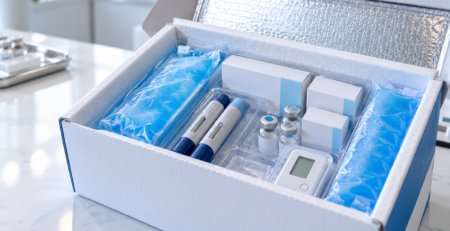
The cold chain is specific. Insulin and certain biologics must be kept between 2°C and 8°C, and even a brief excursion outside that range can be a serious problem. That’s a strict, narrow rule for a short list of medications, and it requires active management, insulated packaging, gel packs, and monitoring throughout transit.
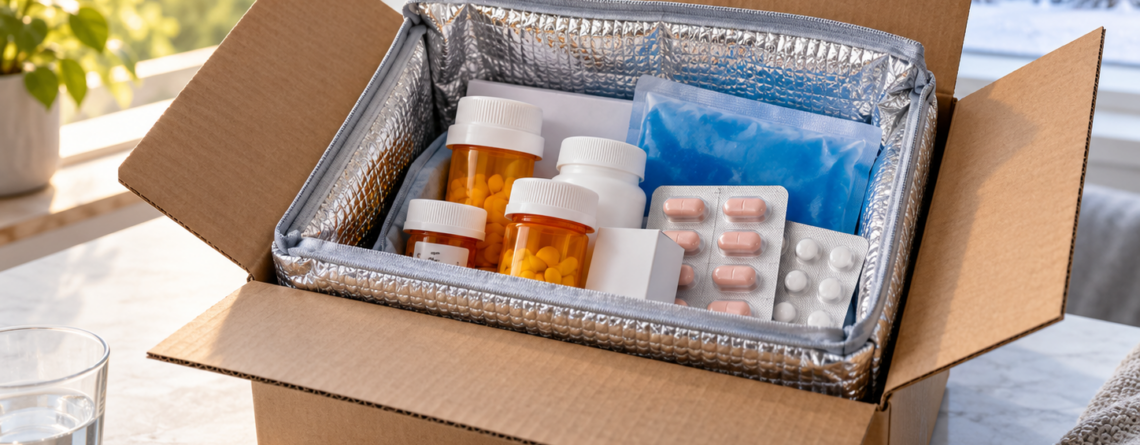
Temperature-controlled delivery is a different, wider category. It keeps any medication, including the ordinary pills most people take, within a reasonable range during transit so heat or cold doesn’t degrade them before they reach you.
There’s no refrigeration involved. The goal is simpler. Keep a package from cooking in a hot vehicle or freezing on a doorstep for hours. Nearly everything shipped needs this baseline level of care.
What Temperature-Controlled Medication Delivery Actually Protects Against
Most standard medications are rated for what the pharmaceutical industry calls controlled room temperature. That range is 15°C to 25°C, with some allowance for brief excursions between 15°C and 30°C without causing a real problem. That’s a fairly forgiving range, which is part of why most prescriptions handle normal shipping conditions without issue.
The real risk shows up at the extremes. A package sitting in a hot vehicle for hours in summer or that’s left on a freezing doorstep overnight in winter. Neither is common. And while standard delivery timings are designed to minimize how long a package spends in transit, it’s better to be prepared.
What You Can Do on Your End
Bring a delivered package inside as soon as you reasonably can, rather than letting it sit in a mailbox or on a porch all afternoon. If you know you won’t be home, ask for a delivery window that better matches when someone will be there, or consider changing the delivery address to where you’ll be.
None of this requires special equipment or a change to how you order. It’s mostly just not letting a package bake or freeze longer than it needs to.
A cold snap or a heat wave doesn’t change how your order gets packed. The packaging already accounts for a normal range of transit conditions, so you don’t need to time an order around the weather forecast for most medications.
Every Order Gets This Protection
You don’t need to ask for temperature-controlled handling or pay extra for it. It’s built into how ADV Pharmacy ships every order, regardless of the season or what’s in the package.
Set Up Your Delivery
Questions Worth Asking About Temperature-Controlled Medication Delivery
Does This Apply to Over-the-Counter Items or Just Prescriptions?
Both. Temperature-controlled handling isn’t limited to prescription medications. Anything shipped through ADV-Care Pharmacy, prescription and over-the-counter, gets the same baseline protection during transit.
What About Medications That Need to Stay Cool for a Different Reason, Like Liquid Antibiotics or Eye Drops?
That’s a separate issue from shipping. Some liquid antibiotics need refrigeration once they’re mixed, and certain eye drops do too, but that’s usually about how you store them at home after you have them, not how they travel in transit.
If you’re unsure whether something you’re receiving needs special handling upon arrival, ask when you order.
If My Order Has Several Different Medications, Does Each One Get Handled Separately?
No, we package each medication according to its temperature requirements. So, cold-chain medications will be packaged separately from other medications. Although you may receive one package, it may contain 2 separate packages inside it.
Is There Any Way to Know if a Package Had a Temperature Problem in Transit?
You can’t tell from the outside, which is why it’s worth checking in if something ever feels off. A box that looks fine can still have spent time somewhere too hot or too cold. Treat a real doubt as worth a quick call, not something you can rule out just by looking. ADV-Care Pharmacy includes temperature monitoring for sensitive medications or when delivery takes longer.
Protection That Doesn’t Depend on the Weather
Temperature-controlled delivery isn’t a dramatic safeguard. It’s a quiet one, and it’s built into how every order ships regardless of the season. If a package ever arrives feeling noticeably too hot or too cold, let us know rather than assuming it’s fine.
Contact Us About a Delivery
Disclaimer: We’re here to support your wellness journey with expert pharmacy care and convenient access to your treatments. However, the information we share is for educational purposes and isn’t meant to replace the advice of your primary doctor. Always chat with your physician before starting a new treatment or changing your routine or if you have specific questions about your medical diagnosis. We’re happy to work alongside your doctor to ensure you get the best care possible!