What Actually Happens to Insulin in the Mail? Cold Chain Pharmacy Delivery, Explained
Cold chain pharmacy delivery isn’t about how fast a package arrives. It’s about keeping specific medications, mainly insulin and certain biologics, within a strict 2°C to 8°C range from the moment they leave the pharmacy to the moment they reach your door.
Cold chain delivery might sound like it’s about speed. It isn’t. It’s about temperature, specifically keeping a narrow band of medications, like insulin and certain biologics, between 2°C and 8°C the entire time they’re in transit.
Even a short excursion outside that range can affect how well the medication works, which is why a pharmacy can’t just wing it with a fast courier.
In 2019, ADV Pharmacy upgraded to temperature-controlled packaging specifically to handle this, and it’s worth understanding how it actually works before you assume mail-order and refrigerated medication don’t mix.
What Cold Chain Actually Means
According to Diabetes Canada, unopened insulin needs to stay between 2°C and 8°C, and once it’s opened, it’s generally fine at room temperature for about four to six weeks.
The general guidelines on how long you can keep opened insulin at room temperature are
- Most insulin brands can be kept for up to 1 month.
- Levemir and Toujeo are safe for 42 days.
- Tresiba is safe for 56 days.
That 2°C to 8°C range isn’t a suggestion. It’s the range manufacturers test against, and it determines whether a medication is still doing its job by the time you use it. Don’t use insulin that’s been frozen or exposed to temperatures above 30°C.
This is a different, narrower category than “keep it out of the heat.” Most pills tolerate a normal range of room temperatures without issue, which is why the vast majority of what a pharmacy ships doesn’t require any special handling.
Cold chain delivery is specifically for the medications that don’t tolerate that range, and that list is shorter than people assume. It’s mostly insulin, certain biologics, and a handful of other injectables, not the average prescription sitting in your medicine cabinet.
How Cold Chain Pharmacy Delivery Actually Works
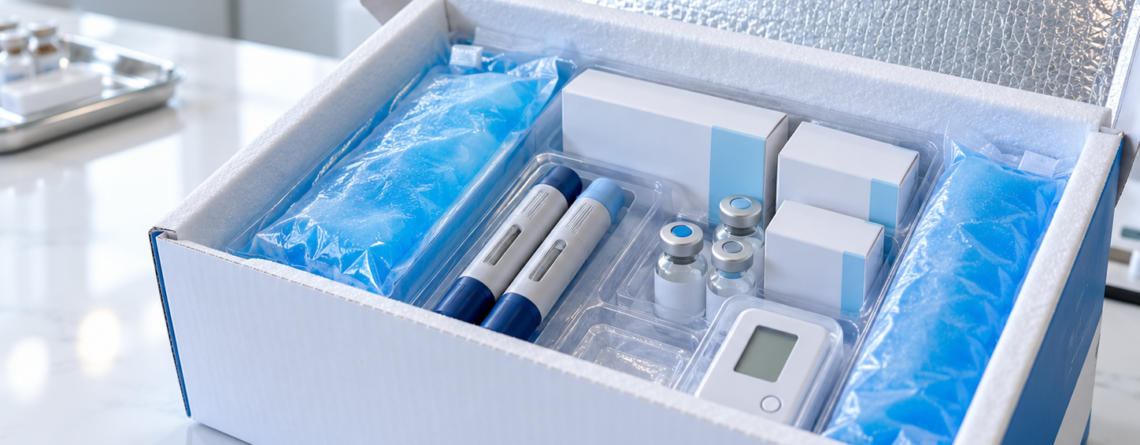
In practice, this means insulated packaging, gel packs sized for the transit time, and monitoring that flags whether the temperature was maintained during the trip. It’s not glamorous. It’s closer to how a lab ships a blood sample than to how a bookstore ships a paperback.
The packaging is tailored to the expected trip duration, not a one-size-fits-all box. A same-day local delivery needs less insulation than a shipment heading farther out, and we size the gel packs accordingly so the medication stays within the temperature range for the full expected transit time, with a buffer built in for delays.
Every shipment that needs this treatment gets it, and we handle the temperature data the same way we handle any other order information. With precision.
If you’re on a medication that needs cold chain handling and you’re nervous about switching to mail delivery, this is the part that exists specifically to address that. But if you have any questions or concerns, please contact us.
The Real Drugs Cold Chain Delivery Applies To
As we’ve discussed, insulin products like Lantus, NovoRapid, and Novolin GE need refrigeration at 2°C to 8°C before use.
Biologics carry a similar requirement. Cosentyx, for example, must be refrigerated at 2°C to 8°C, with a short allowance at room temperature, up to four days, once you’re ready to use it. Humira, another commonly prescribed biologic, follows the same 2°C to 8°C storage rule.
Newer injectable medications for diabetes and weight management, like Ozempic, also need refrigeration before first use.
These are real medications that real patients are taking today for conditions ranging from diabetes to psoriatic arthritis. Cold chain delivery makes it possible to ship them by mail without compromising how well they work.
If you’re not sure whether something you take falls into this category, ask. It’s a quick question, and it’s better to ask before you place an order than to wonder after a package arrives.
What to Do if a Package Arrives Warm
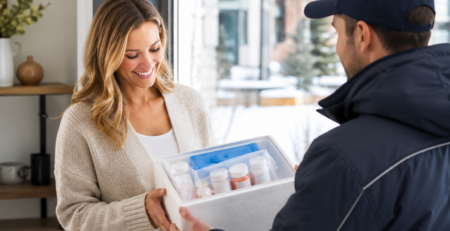
If a package that should have arrived cold feels warm, don’t use what’s inside and don’t assume it’s fine. Contact us before you take it, and be ready to describe how the package felt and how long it may have been sitting.
We’d rather replace a shipment than have you worry about whether your medication is still working.
Cold Chain Delivery Questions Worth Asking Before You Switch to Pharmaceutical Mail
Does Cold Chain Delivery Cost Extra?
Not as a separate line item. It’s built into how the relevant medications are shipped, not an optional upgrade you choose at checkout. Additional shipping cost can be added in special situation when the medication take long time in transit.
Can I Ask for a Specific Delivery Window So Someone’s Home to Receive It?
Yes, and for anything cold chain, it’s worth doing. A package sitting on a doorstep for hours matters more for insulin than it does for a bottle of tablets. ADV-Care request signed confirmation on delivery to eliminate any doubt.
What if I’m Travelling and Need My Insulin Delivered Somewhere Unfamiliar?
Talk to your pharmacist before you place the order. Cold chain packaging still applies, but delivery timing and address details matter more when you’re not somewhere with a predictable schedule.
Is Frozen the Same Risk as Warm for Insulin?
No, and in some ways it’s worse. Freezing can damage insulin permanently in a way that isn’t always obvious just by looking at it. If a package arrives having been anywhere near freezing conditions, treat it the same way you’d treat one that arrived warm. Contact us immediately.
The Chain Doesn’t Break Just Because It’s in the Mail
Cold chain package delivery exists so that switching to mail order doesn’t mean gambling on whether your medication still works. That’s why we build it properly.
Talk to Us About Cold Chain Delivery
Disclaimer: We’re here to support your wellness journey with expert pharmacy care and convenient access to your treatments. However, the information we share is for educational purposes and isn’t meant to replace the advice of your primary doctor. Always chat with your physician before starting a new treatment or changing your routine or if you have specific questions about your medical diagnosis. We’re happy to work alongside your doctor to ensure you get the best care possible!